 Horses and Ponies shares knowledge, experience and the love of equines on the lifelong path of improving horsemanship.

How to Clean a Horse Sheath - A Must Do Job for Better Health Eliminating Pain and Discomfort Cleanliness in any form is a good thing. Keeping your horses sheath clean and free of beans is a very … [Read More...]
Treat and Prevent Thrush

The vet checks a horse's hoof
The vet checks a horse's hoof
~ How To Recognize, Treat and Prevent Thrush in Horses and Ponies ~
By Adrianne Lake
Thrush is a common ailment of the hoof. The root cause of thrush has been debated for years although the treatment and prevention is quite universal. Thrush occurs when anaerobic bacteria and moisture gets trapped in the hoof (generally around the frog) and creates a fungal infection. This infection eats away at the frog. Thrush can cause anything from mild discomfort to lameness when it reaches the deeper tissues of the hoof.
Causes of Thrush
*Poor hoof care (lack of regular picking and trimming/shoeing.
*Unhygienic conditions (overcrowded/muddy paddocks, soiled stalls).
*Lack of exercise and poor circulation.
*Poor diet.
*Hoof abnormalities.
Thrush seems to be more common in the spring and in milder climates. Remember the bacteria that causes thrush is anaerobic, which means it thrives without oxygen. Some horses seem predisposed to thrush due to poor hoof quality or imbalances. Some vets and farriers speculate that thrush occurs when a vitamin or mineral deficiency is present.
Signs of Thrush
*Noticeable pungent, foul smell when picking the hoof.
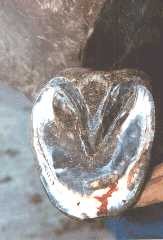
*Thick black substance in or around the frog.
*Soft frog with unusually deep clefts or groves.
*Sore and tender heels.
*Lameness.
If you think your horse or pony has thrush, don’t panic! Thrush is common and thankfully, very treatable.
Mild Thrush Treatment:
I’ve used apple cider vinegar and/or sugardine to treat thrush with great success. Commercial products like Thrush Buster and Koppertox also work well. Do not use bleach or anything harsh as it will kill the healthy tissue as well as the infected tissue. Treatment of mild thrush is usually very successful and generally takes one or two weeks. Follow these steps daily until you notice improvement. Then continue treatment two-three times a week until all signs of thrush are gone.
1. Keep your horses living quarters clean and make sure he’s getting enough exercise/turn out time.
2. Have your horse standing on a clean and dry surface. Clean the hoof thoroughly with a hoof pick, bucket of clean, warm water and a stiff brush. Take care to remove all dirt and foreign objects.
3. Dry with a towel and to air dry for a few minutes.
4. Pick up the hoof. Beginning with the heel, apply your remedy of choice to the hoof, paying special attention to the frog and it’s grooves.
5. Allow the medicine to dry before finishing.
Severe Thrush Treatments: (Call the vet and farrier if your horse has severe thrush.)

Cleaning a horse's foot
Your vet/farrier will decide upon the most appropriate course of treatment for your horse. This usually consists of removing all infected tissue followed by an intense treatment plan. This may include packing and wrapping the hoof, antibiotics, and corrective shoeing.
Preventing Thrush
In wet weather and springtime, I spray my horses frogs and hooves with apple cider vinegar (after picking of course!) to help prevent thrush. Other preventative measures include:
*Keeping stalls clean and fresh.
*Lots of turnout and exercise.
*Avoid overcrowding paddocks.
*Daily hoof picking.
*Regular hoof trimming/shoeing (every 6-8 weeks).
*Ensure you horse is getting all required nutrients.
With excellent hygiene and care, thrush can easily become a thing of the past.