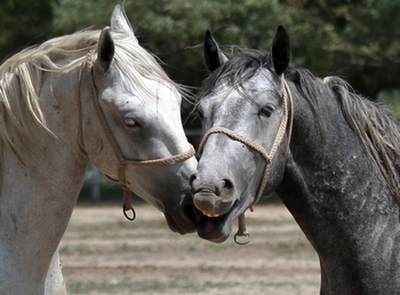
Horses and ponies are always “talking”. They have a language unique to their species. If we can learn to understand their language it makes our job as riders, trainers and horse enthusiasts make more sense.
Basics of Equine Body Language and Horse Sense
You’ll notice that experienced horse people just seem to have a feel for horses. They just know by glancing at a horse how it’s feeling.
Horses and ponies rely on body language to communicate. They do make vocal noises, but generally their “alphabet” consists of various behaviors, stances, positions and expressions to form a “sentence”. This is how equines communicate to each other naturally. Because they know nothing else this is also how they communicate to us.
It’s important to understand the basics of horse and pony body language to accurately assess how and why your horse is feeling the way it does. It also helps determine your position of leadership as the animal sees it. Which one of you is the Alpha Horse?
Having a “feel” or understanding for your horse’s body language will also help you know if your horse is feeling frightened, spooky, flighty, aggressive, sick, or hurt.
Reading horses takes more than understanding a few key things. You develop an eye for reading their body language. I recommend observing one horse to start. Watch him while in the field, in a stall, in the crossties, under saddle and while being groomed. You’ll begin to notice the different moods and emotions he feels.
The Overall Picture
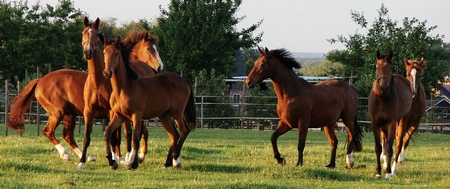
When you first look at a horse there are a few things you should notice. First of all, how is he standing? What is his stance like?
Check to see if his body and muscles are tense or relaxed. Look at the withers and how the tail and neck are set to determine this. How is the horse breathing? Is it a relaxed, regular breath? Laboured? Does the horse seem to be holding his breath?
There are a few things that are fairly obvious when looking at a horse. For example, if the horse is bucking or rearing, the animal is frustrated, defiant, hurting, aggressive or confused. Head tossing is a sign of defiance. If under saddle this might be a sign the animal isn’t listening or is receiving mixed signals.
Body Signals
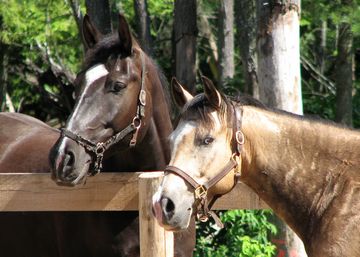
When reading horses it’s important to look at each indicator and put them together to form a whole expression. For example, a horse with his ears forward may mean a number of different things. You must look at the animals stance and other body signals to determine exactly how he is feeling. Here are some common body signals that horses and ponies use to communicate.
Eyes
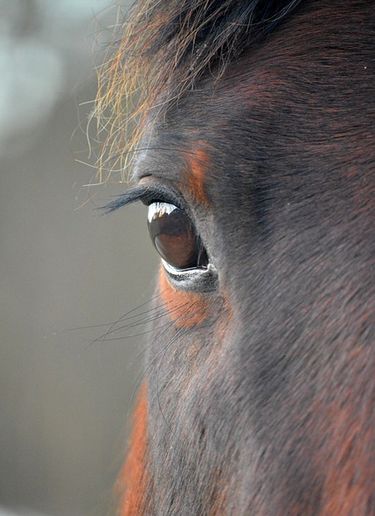
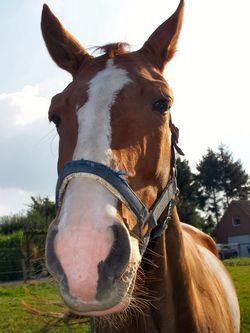
The first thing I look for in a horse is the look in their eyes. A wide range of emotions can be determined from the eyes. A horse may have a kind, worried, curious, wild, gentle or intelligent “look” to their eyes.
Here are a few indicators to help you read the eyes:
- Whites visible (except in appaloosas)- Anxious, angry.
- Half closed – Tired, relaxed, sleeping.
- Wrinkled – Worried.
- Blinking – Processing information, thinking.
- Soft eye – Gentle, relaxed, learning mode.
- Hard eye – Tense, resistant.
Ears
Watching the ears can help determine where the horse is focusing and how it is feeling. Generally a horse is focused on what the ears might be pointing at.
- Turned back – Focused on something behind, tired.
- Pointing forward – Attentive, curious.
- Rigid pointing – Fear, uncertainty.
- Droopy – Tired, sleepy, bored.
- Pinned back – Threatening, aggressive, angry, warning.
- Pointing in different directions – Focused on two things at once.
- Rotating – Lots going on, curious, nervous, indecisive.
- Airplane ears (drooped out to side) – Depressed, drugged, unwell, sleeping.
- Neutral – Normal.
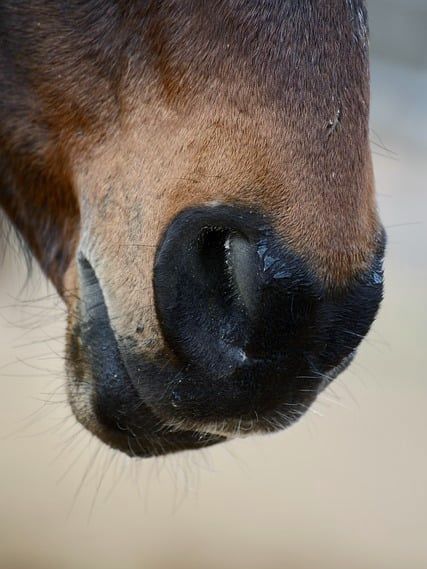
Muzzle, Lips and Nostrils
- Tight/hard lips – Anxious, tense.
- Wrinkled muzzle – Nervous, worried.
- Licking/Chewing – Stress release, digesting ideas, acknowledgement.
- Drooping lip – Relaxed, bored.
- Swishing/Mobile Muzzle – Curious, extroverted.
- Flared nostrils – Nervous, excited, alert, working.
- Relaxed nostrils, soft muzzle – Neutral, relaxed.
- Flapping lower lip – Unfocused, sensitive, nervous.
- Open mouth, mouthing – Often seen in foals. “I’m a baby- don’t hurt me”.
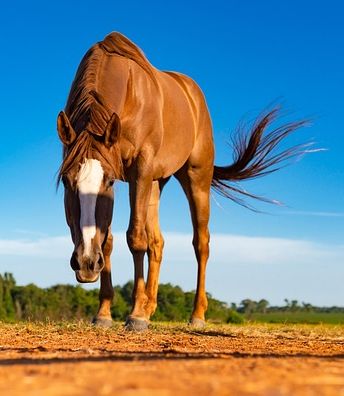
Head and Neck Set
- Low -Accepting, relaxed.
- High – Fear, anxiety, defiance.
- Level – Neutral, Focused.
Tail
- Swishing – Annoyed, irritated, flies.
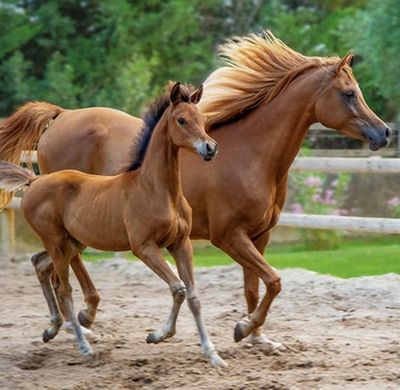
- Flagged – Excited, happy, playful, alarmed (often seen in Arabians and foals).
- High/Raised – Attentive, excited, happy.
- Low – Submissive.
- Neutral/level – Focused, normal.
- Clamped down – Fearful.
Legs
- Pawing – Frustrated.
- Standing square – Attentive.
- Hind hoof resting – Relaxed.
- Hind leg lifted – Warning, defensive.
- Stamping- Flies, mild irritation.
- Striking – Angry, threatening, fighting.
- Dancing around – Nervous, excited, frightened.
How Horses and Ponies Interpret the World
Just like us, horses have five senses. It’s good to know how a horse or pony sees, feels, tastes, smells, and hears to understand their nature. Some people argue that horses have a “sixth sense”. While not scientifically proven, it does seem that horses have keen instincts (or intuitive abilities, if you will).
While not exactly a sense, memory is worth noting. Horses and ponies have very good long-term memories. This is why they can be trained easily. Horses are forgiving animals but they will never forget. However, while in a state of panic, anxiety or stress, horses will not remember much except the negative feelings they are experiencing. Training while in this state is pointless as they will not recall what you were trying to teach.
Sight
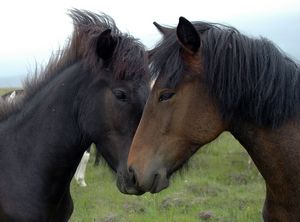
Horses rely heavily on their vision. Unlike people, horses can see almost panoramically around them. They have a blind spot directly behind them and in front.
Horses will lift and move their heads for a better view of something that has caught their attention. Each of their eyes can see individually. This is why it’s important to teach things twice – once on one side and once on the other so that both eyes have interpreted it.
While grazing, one eye is on the grass and the other watching out for danger. Although it seems horses can differentiate between colours (especially blue and red), it is generally thought that they have poor colour vision. They can see the slightest movements and have good night vision. Horses will often go in the direction they are looking which is important to remember while riding or training. Observing the appearance of the eyes is a good way to find out what’s going through their mind.
Smell
Horses greet each other by smelling. You could say they “shake hands” by sniffing noses. Horses and ponies will smell food, people, curious object or things they are fearful of. They use smell as a recognition tool. If a particular grain does not smell appealing a horse will not eat it.
Hearing
Much can be learned by observing horses ears. Hearing is fairly keen in horses and ponies. Their ears are mobile and can be rotated around and often fixate on things of interest. They can listen to two things at once and focus each ear. It’s fairly easy to determine how attentive a horse may be by watching the ears.
Touch
Equines are very sensitive creatures. They are capable of feeling a single fly. The muzzle and whiskers are particularly sensitive. Horses are capable of feeling pressure, pain, temperature, and pleasure. Always remember how keen their sense of touch is when working with them. Many horses are nervous about having their faces or bellies touched. Most horses love to be scratched and stroked. Touch plays a huge role in equine social life and they will “groom” each other in a pasture.
Taste
While not as important as other senses (some horses may not agree), an equines sense of taste is well developed. They love grain and treats and will eat more than necessary if given the chance.
Mares and Stallions
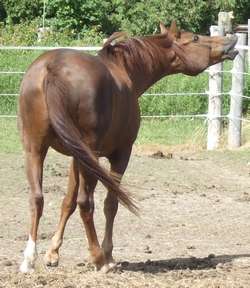
It is also good to recognize a mare in heat and a stallion acting “studdy”. A mare in season will back into other horses, urinate frequently, raise her tail and wink her vulva. Many mares have temperament changes while in heat. A stallion (or sometimes a gelding) is said to be acting “studdy” when he is trying to court a mare. He may act alert, arch his neck, stand tall, nicker, dance around, dominant other males, or attempt to mount another horse. The flehmen response refers to a horse curling his upper lip up and out. It is usually seen when a stallion smells a mare in heat. However, other horses will do this when they smell something unusual.
Working with Horses and Ponies
When working with horses, there are three things I generally look for. The easiest way to determine these things is by looking at the neck/head set. They include:
Anxiety: Head/neck high, wrinkled eye and muzzle, tense/moving around, dominant, uncertain.
Focused: Head/neck level, tail slightly raised, rhythmic motion.
Accepting: Head/neck low, mouth licking and chewing, softer eye, relaxed, submissive.
I always end a session with a horse in either an accepting or focused state, but never in anxiety. It is also important for you to keep calm when you work with horses because you don’t want to add to the tension. Many horses (especially green) begin a session in a state of anxiety. The goal here is to alter this state first to an accepting one, and then eventually a focused one. A horse won’t learn much of anything in a state of anxiety.
Learning to read horses is a rewarding experience and a valuable skill. It takes time, patience and practice but is well worth the effort. Learning to read equine body language will greatly enhance your abilities as a horseperson.
by Adrianne Lake