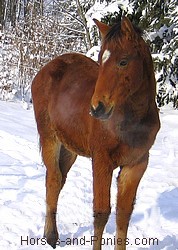
sca (5K)

Horses and Ponies


Horses-and-Ponies.com
... for people who love horses and ponies


Horses and Ponies Home Horses and Ponies eStore

How to Care for Your Horse in Winter Weather


Popular Articles

Thrush

Horses and Personal Space

Apple Cider Vinegar for Horses

How to Make Sugardine for Horses

Bone Breaks and Fractures in Horses


Related Horse Care Articles:

Equine Influenza

How to Groom a Horse or Pony

Round Pen Training

Applying Natural Aids

Prevent a Horse from Bucking

winterhorse (18K)

Horse and Pony Winter Care Basics


How to Care for Your Horses and Ponies in Winter
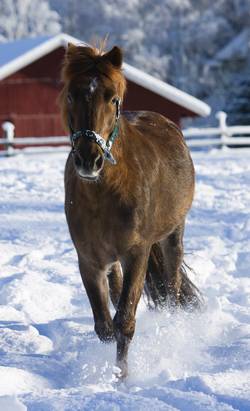
So often well intentioned horse owners opt to stable and/or blanket their horses during the winter months usually because they are afraid of their horses being cold and miserable. Just because we are "cave dwellers" and get cold very easily doesn't mean your horse does. Most horses prefer outdoor open spaces, room to move, lots of forage and the company, companionship, and the freedom to participate in a herd hierarchy. This is because horses have evolved to live naturally and despite being domesticated for so long they are still well equipped to deal with harsh winter weather. But please don't throw your beloved equine into sub-zero temperatures quite yet! Read on to be sure your horse is fully prepared and has everything he needs to keep happy and warm outside in the winter.

Stabling:

Did you know that by keeping your horse stabled you may actually be making him colder? Everyone knows that if you are cold, moving around and increasing circulation will warm you up. This is especially true for horses. Even a box stall is like keeping a dog in a small kennel. They cannot move around enough to maintain good circulation, digestion and warmth. Aside from anything else fresh air and the freedom to move is much healthier than keeping a horse in the fanciest of stables.

Natural Winter Coats and Blanketing:

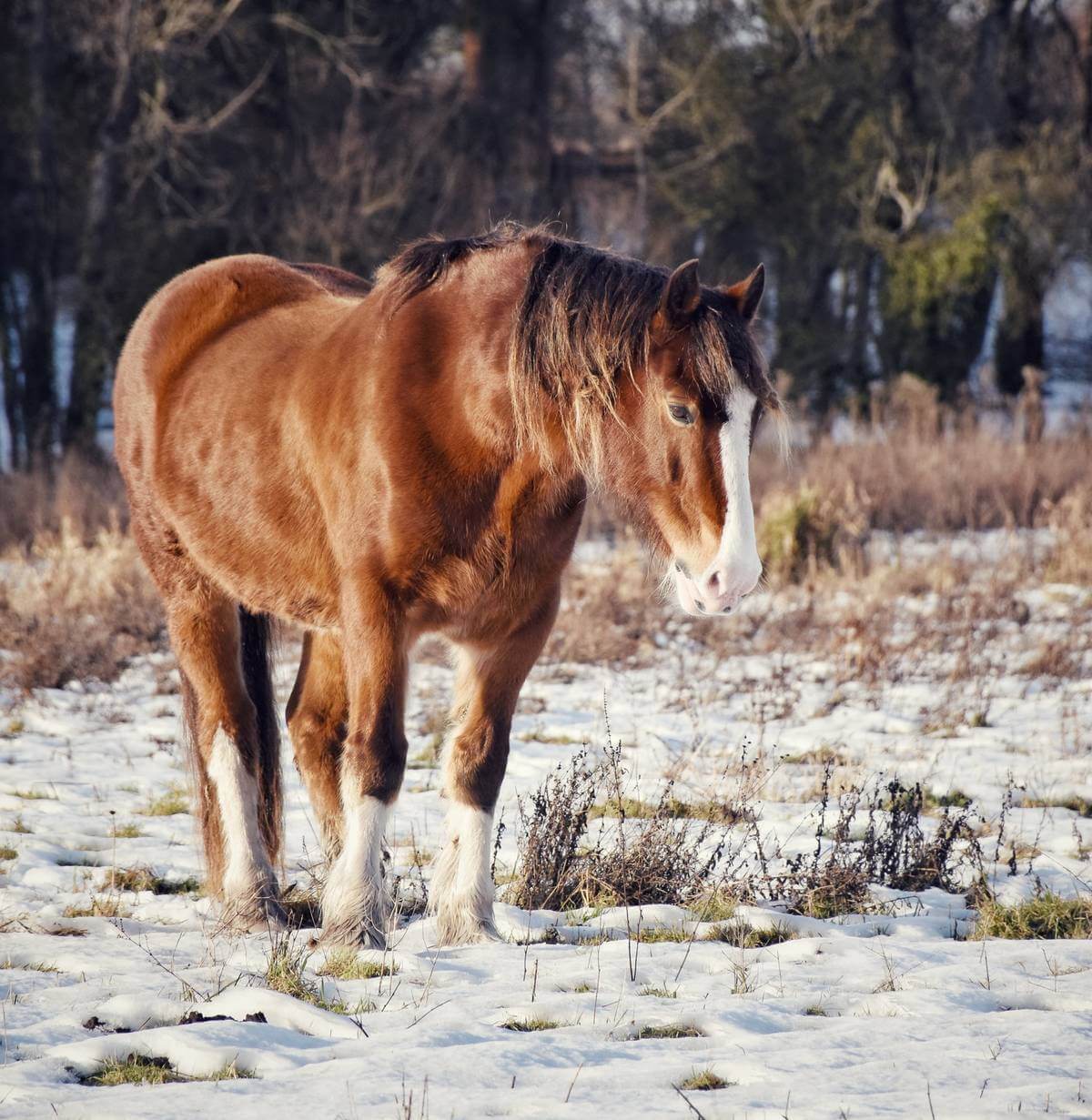
A horses' best defence against cold temperatures and dampness is his own well developed winter coat. A horse with a winter coat leaves air pockets for insulation and warmth when it is cold (when you shiver, your own hair is making air pockets to warm you up!). A good winter coat grows longer, thicker and develops a slightly oily texture for protection against rain and dampness. However, once the coat becomes soaked the all important air pockets lose their ability to trap air and the horse loses some of its super thermal natural coat. (See below for more information on this and how to help your horse cope naturally).

Blankets apply enough pressure to flatten the coat and remove any natural air insulation. And if you put on a blanket that is too light for the weather it is the same effect as if you were to wear a fall coat in the middle of winter.

Forage, Digestion and Water:
It is crucial for horses that are outside in the winter to have plenty of forage. Good quality free choice hay, or restricted hay feeders are the best options. Horses are trickle feeders and constantly need something in their bellies. Digestion releases heat and keeps the horse warm. In really cold temperatures horses will eat more forage naturally to keep themselves warm. Of course, along with forage, water is very important in the winter. Horses tend to drink less if the water is really cold. Horses and ponies need access to fresh water at all times...watering twice a day just doesn't cut it. Also, leaving a horse to eat snow as water intake is not wise either. Make sure salt is available, and have a heated water trough if you can. Feeding soaked hay cubes is also a good idea. If a horse isn't getting enough water digestion issues often occur . This is why more colic cases occur in the winter months.

Preparing Horses for Winter


Body Condition:

In the summer, most horses have gained some weight by being on pasture. In the wild horses fatten up in the summer to prepare for the winter. Horses should have excellent body condition and be an ideal weight to cope well in the winter. A good rule of thumb is that ribs should be felt with your hands, but not visible to the eye. Looking at a Body Condition Score Chart is a great idea. Younger and older horses have a harder time regulating their body temperatures but with proper care and preparation it is manageable and healthy for them.

If you want to keep your horse outside in the winter prepare before the colder temperatures come along. Keep your horse outside now so that he will gradually get used to the changing season and grow a proper winter coat. Make sure the horse is in great health and has good body condition/weight. Ensure the horse is parasite free and dental care is up to date. If your horse is a little thin, feed some extra oats to fatten him up a bit. Once the cold comes it is much more difficult to maintain an ideal body weight.

The Outdoor Paddock and Shelters:

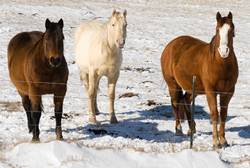
winterpasture (10K) The outdoor paddock should have good, safe fencing, proper drainage, a heated water trough, and shelter. Run-in sheds are great. Place them correctly so that the wind doesn't blow into them and ensure proper drainage. Bed it with straw if you can. If you have more than a couple horses make sure the run-in is big enough to accommodate them all. Often a more dominate horse will dominate the whole shed! Two shelters is not a bad idea. Tree lines and other natural wind breaks help a lot too. Make sure there is somewhere for your horse(s) to get out of the wind or rain. Do not keep a horse outside 24/7 without proper shelter. Many people are amazed at how little the horses use their shelters but nonetheless it is important to have them available. As mentioned above, free choice hay should be available in the paddock. If your horse or pony tends to get fat consider a restricted hay feeder. Take care to watch the footing in the paddock. A paddock with ice like a skating rink is not safe for horses.

During Cold Winter Months:

During really frigid temperatures it is important to watch outdoor horses carefully. During a cold spell it might be wise to increase grain consumption to help the horse keep warm and maintain condition. (Note: only increase grain if your horse is already used to grain. And only use concentrated feeds if forage isn't doing the trick. Abrupt changes in diet like suddenly adding too much grain can easily colic a horse. If your horse isn't used to grain, hay cubes soaked in hot water is a better option.) If your horse is shivering and/or the ears or cold the horse isn't warm enough. Give him extra grain and make sure shelter is available. Having a barn available as a back-up plan is good if the outdoor shelter and extra calories isn't sufficient. Then if your horse isn't coping well or if the weather is particularly bad, bringing him in for awhile is a good option.

Benefits of Keeping Horses Outside

The most obvious benefit here is that outside living for a horse is natural. They get freedom, more movement, and can interact with other equines. Outdoor horses are usually mentally, emotionally and physically better off. Vices are of considerably less concern. Generally horses are much happier and healthier when left to frolic and forage outside. Of course their are exceptions. Sick, weak, thin or injured horses may need alternatives. But a well maintained horse will be happier and healthier outside.

Copyright © 2011 Adrianne Lake www.horses-and-ponies.com

Print this Page


New Articles:

Winter Care of Horses

Equine Influenza

Head Injuries

Bond with Horses and Ponies

Colic

Horse Sheath Cleaning

How to Lead Horses and Ponies

Ground Manners

How to Halter Horses and Ponies

Barrel Racing Horses

Mustangs and Burros

Body Language of Horses

Round-Pen Training

Paints and Pintos


Save This Page to del.iou.us


Recommend Horses-and-Ponies.com
Terms of Service || Privacy Policy

All articles and graphics are the property of the authors. You can use them for personal use only. Use of any information contained on Horses-and-Ponies.com is deemed at your own risk. A link to any page on Horses-and-Ponies.com is appreciated, but please don't copy, re-work, or re-publish our copyrighted material on other web sites or elsewhere without written permission.
Copyright © 2002-2009 Horses-and-Ponies.com All Rights Reserved Worldwide.
Horses and Ponies